Monday, 14 September 2009

Finnish Food 101

Pick up any Traditional Finnish Food cook book (mainly the ones in Finnish Language) and in the preface you'll undoubtedly read dribble like "Finland has the finest fresh ingredients" or "Spices are not used in Finnish Cuisine because Finns prefer to enjoy the superb quality of the freshest ingredients in Europe". [note to self: acquire some citations and post there here]

out of the closet


Any decent researcher will declare their research premise up front, as noone modern believes in the fantasy of "context free" positions, and writing in "It can be observed" or "It is found" is just rubbish designed to lull the reader into some trance of belief in the writers intentions.

poppy cock. I write what I think and justify it with evidence, determination of the "truth" is up to the reader ... not me.
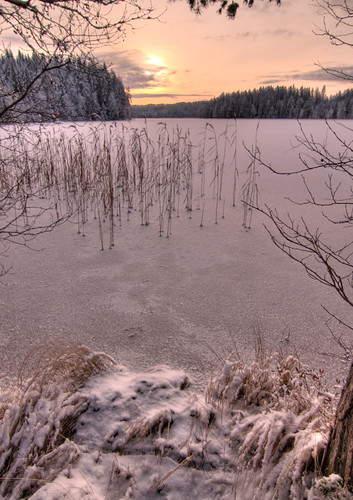
winter SunsetFinland is a dam harsh place to live, aside from Siberia its hard to find a harsher place to live in than Northern and Eastern Finland. Modern amenities (insulation, energy, transport) have made life far far more comfortable, but sit outside in Jeans and a T-shirt for half a day in winter and you won't have hypothermia, you may well be dead.

Accordingly traditional food is whatever you can get in a harsh climate, its restricted in scope, preparation and condiments.

Not using much spices in cooking is certainly a truth, but people are influenced by food culture they see on TV or read about in books. They have no traditions on how it might be prepard (and precious few foreigners to show them) so penetration of this into life is problematic. A quick visit to the supermarket will make it clear that understandings of how to prepare food are very limited. For a start its dam hard to find any nice ingredients.

An endless array of the same kind of luncheon meat, pressed ham pieces or salami repackaged (but looking the same), tons of pre-packaged 4-in-a-bag German styled (but that's where it ends) knack-wurst looking sausages (the staple diet it seems), and some cuts of meats plastic wrapped and covered in slime (which passes for "grilli flavor", usually just makes washing up harder but supplies little in any taste). Almost all the chicken will be
  • breast fillets covered in some obscene slime which passes for "grill flavor"
  • breast fillets "natural" (if your lucky)
  • mangled breast fillets covered in the same sickening slime (you couldn't call this diced, its clearly by machine)
  • legs or drumsticks covered in some "grill flavour" which looks like it started as a powder
  • perhaps if your lucky you'll also be able to find mangled up thigh fillets
The pork suffers from the same issues.

Why is it so


Well if you think about Finland geographically you'll soon see that its about as far into the polar regions that humans can live and grow their own food. In fact its only the Gulf Stream and proximity to the Baltic (stabilizing air temperatures) which makes it as habitable as it is.

Seems funny ... but if you pick up a large ball and (without turning it) look at it as if you were the sun and it was the earth, then after you get far up past the 50th parallel you'll see that it is starting to behave as a log scale ... small vertical movements take you further along the earth. As you can see in this diagram the red area on the top of the earth is longer for the same movement in height at the equator.

These parallel lines are a good representation of the amount of sunlight falling on the earth, so the further north you go the more land the same amount of light is spread across (and I haven't even taken the extra tangent through the atmosphere into account yet).

Growing seasons are tightly defined and despite the days of long periods of sunshine in the summer if you plant your crops even a little late they just won't grow enough to produce a harvest. If you try to plant to early you could risk loosing all of it with a snap frost killing off the seedlings. Its a tough growing environment and gets harder the further north you go. I recommend that you get a patch of land and start growing your own potatoes and vegetables to see what I mean.


Accordingly Finns have a strange view of divisional regions in Finland which is almost like the same Log scale.

Southern Finland is the little strip along the bottom I've marked, Central Finland is that patch in the south and northern Finland is all the way from just below the middle to the top. I've marked an area with an arrow point to it, this is roughly the point at which Lapland starts and reindeer herding starts ... perhaps the Finns are aware that this really isn't Finland and is infact the Sami lands, but that's another blog article...

All of this of course has an enormous impact on food: what's available, what it costs and when you can get it.

Something which would be intuitive to our parents and grandparents but seems to be lost on the supermarket generation who (among other things) are so decoupled from our reality that they think water comes from the tap.

So clearly in this environment Potato is one of the main staples, along with Turnip (locally called Lanttu) Carrots, peas and some other of the "plain jane" stuff of our (Australian) childhoods.

Grains like Oats Barley and Rye are grown here while wheat has traditionally been a "exotic" and or expensive grain. This has a strong influence on breads ... hope you like them chewy.


The text kovaa kuin elämä means hard as life. Especially with bread certainly fresh is best. But the emphasis with bread making (in my view) is on storage and not wasting anything.

Think about it ... its not long ago that thousands died in starvation caused by crop losses. If you think in internet sorts of terms you'll only see the now. Humanity is not so transient (well I hope not) and so if you take a historical perspective to it, rather than an internet timespan, think of the climate and perhaps it'll make more sense. Let me quote from the Wikipedia link above:

Parts of the country had suffered poor harvests in previous years, most notably in 1862. The summer of 1866 was extremely rainy, and staple crops failed widely: potatoes and root vegetables rotted in the fields, and conditions for sowing grain in the autumn were unfavourable. When stored food ran out, thousands took to the roads to beg. The following winter was hard, and spring was late. In Helsinki, the average temperature in May 1867 was +1.8°C, about 10°C below the long-time average. In many places, lakes and rivers remained frozen until June. After a promisingly warm midsummer, freezing temperatures in early September ravaged crops; the harvest was about half the average. By the autumn of 1867, people were dying by the thousand.

Pork is pretty much the main meat, with some amounts of Beef (cattle seem to be kept for dairy) and a little bit of mutton. Note the word for mutton is quite conveniently "lammas" so watch out when you're looking for lamb. Finnish language is full of such issues and they do not differentiate between "electronics" and "electrical" in normal language, try being an engineer and looking for a place to buy some electronics stuff ... but that's another blog article.

Keep in mind the climate and it will become pretty evident that stock animals need to be housed (I mean even sheep have limits and -20 has to be past it). So if you want many of your animals to be around come spring you'll be keeping them indoors. This has enormous impact on the costs of keeping meat and what you'll choose.

Other meats include reindeer and moose (to those who can afford it or know someone who goes hunting), some game birds (well, mainly duck and even that's a hunting thing or fantasy of the past), of course chicken (comes cheaper with slime) and fish.

Of the to fish, Salmon (known locally as Lohi) is certainly the best, but in my view the Norwegian Salmon is the go more than the lake or (even worse the) farmed stuff here. There is another common local lake fish called Muikku, its small and normally netted. In my opinion, some things all the lake fish have in common is they normally have something in common with the taste of lake silt, are better fried with butter and preferably some flour ... anything to disguise the taste really.

Cooking style


I've lived most in Eastern Finland where Keralian culture has been a significant influence, Helsinki (south on the Baltic) has of course plenty of influence from trade with Russia, Germany and the Baltic countries. This makes Helsinki stand out as different from the rest of the place. Country people seem to think of Helsinki as some sort of "black hole of calcutta", but that's ok as Heislinki people get to think of the country people as "vitu maalainen" (which I won't translate here).

Cooking outside is something which happens in the warmer months, and you can find "traditional delicacies" like Lohi fillets being cooked beside an open flame like this. Notice the oil catch tray, Lohi is a very oily fish.

Ovens inside the house are both for keeping the house warm (and are centrally located) and provide a location for baking. Temperatures are hot at first as a fire is built inside the oven directly. At this point you can bake things like Piirakka (shown on the left) which are a thin 'pastry' of unleaven bread dough based on rye flour with perhaps a little wheat tossed in. The interior is filled with (typically) mashed potato or rice boiled in milk these days, but that's quite fancy by traditional standards where it was typically boiled and mashed turnip or oat porridge. They may be served with "egg butter" which is mashed boiled eggs with extra butter.

They're nice, but a bit lame ... if you ask me.

The oven stays quite warm for a while, so this leads to the next most common dish which is Paisti. This is essentially an oven baked casserole, it can contain almost anything, but some combinations I'm familiar with are:
  • pork (with some chunks of skin with the fat on) and beef chunks (poor cuts)
  • pork as above and small lake fish (covers up the mud taste of the fish but seems odd to me)
  • Lanttulaatikko (turnip boiled, mashed, milk added spread in a baking dish and baked)
  • Porkanalaatikko (carrot instead of turnip)
  • Mämmi (a nasty black looking porridge common at easter ... I don't want to hear another word about vegemite from a Finn)
The meat casserole dishes are typically cooked in a deep bowl with just water perhaps an onion and (for the really spicy tolerant) a single black peper corn.

... meat and fat boiled slowly with fish ... no condiments ... yum.

Sure, traditional English food is hardly attractive either, but then I've never said otherwise. After living for some years in Asia I find that Koreans, Chinese, Japanese and Indians all have great food culture, while Scandinavia has ... well ...

So, a combination of lack of food availability, lack of food diversity, little or no spice trade, limited meats makes Traditional Finnish Food look strange today. Its an aquired taste, its simple and if you grew up in the west you might find you don't like it.

I personally find it heavy, saturated in fats (good if you eat little, work hard and live outside) which for my lifestyle (computer systems) is neither good for my health or my palate. Today, if you live in or visit Helsinki you may wonder just what it is that I'm on about, as the conference centers, restaruants and "hesburger" burger outlets makes it look rather different.

There's lots more to say, so in part 2 of this I'll look at some other views (from Finnish sources) of the challenges of Food in Finland ... to wet your appetite I'll say that the traditional "Kauppahalli" (local food market where good food is actually sold) is under threat from the commercial machinery of the K and S chains. Shareholders naturally benefit, food is perhaps cheaper, probably more available and certainly mush.

Monday, 31 August 2009

home sweet home

Ethno-centrism seems to imply a kind of nationalism when reading the definition on wikipedia:

Ethnocentrism is the tendency to believe that one's own race or ethnic group is centrally important, and that all other ethnic groups are measured in relation to one's own
but personally I tend to think more in terms of it being the (perhaps unconscious) basis of all comparisons with "other" places. One's initial frame of reference. But traveling and living abroad these last 10 years has fairly much stripped me of a 'context'. I feel that I can understand Japanese things from a Japanese, Korean things from the perspective of Koreans and to some extent Indian things from that perspective. I tend to be critical of how things are in Australia (the things which I believe we could do better) and want to work towards making where I live a better place.

Well, right now I live in Finland. After observing things here for some years I've started to see things which could be done better here and to understand the ways of doing things here and why they do what they do.

But that doesn't mean that there is nothing that I'd love to change.

The reason for this article is being confronted one time too many by (someone who should have had a better idea cos they've lived over seas) a Finn who just couldn't get it and laughed smugly to me that English Australians and Asians make flimsy houses compared to the fine examples of home making that Finland has. Heck we can't even build a decent wall the right thickness according to this guy.

The guy had lived in England (so I understand why he thinks more insulation is needed) but despite my descriptions of the differences in environment between Australia and Finland he just couldn't get past his Suomi-centrism.

So I thought that the best approach might be to take off my objectiveness, put on my Australian centric glasses and write about this from an outsiders perspective.

So to the guy on the train, if you're reading this, here is my version of you take this bit of iron wire .... yep, this one's for you so read on.

Out of Finland (rather than Africa, that'd be Meryl Streep)


When I was living in Japan I was asked by people "why do westerners live in closed boxes trying to exclude the environment?" ... as I come from Queensland in Australia where we don't live in houses like that (although I now know well that the Finnish do) I was never really sure how to respond to this, our houses are usually airy, wooden and built along lines like this.

? or this ?

The reasons for our architecture are:
- that its warm or hot most of the time,
- we want to capture and utilize breezes and
- keep the heat of the sun away.

Now you need to keep in mind that Finns need to cater for a winter which can get down to -20° C (like more north and east) and in some places -40° C If you put on your engineering hat for a moment that's about 60° C in differential temperature. Rather different to Finland our winter (in the coldest areas of Queensland) drops to something like 0 ° C over night minimums with day temperatures of 15° C or so. A little further north its warmer still with overnight minimums of something like 15°C. At most we need to keep a 20 degree difference in temperature, and to be honest 10 is more like it.

Even if we totally fail and live outside in the cold its really not so bad anyway as winter only is cold for about 2 months of the year. Heck Finnish summer has colder days than our winter is.

So we mostly focus on keeping heat out and letting breeze in. Verandas help this by making the roof overhang from the walls and keep the wall from being heated up by the sun during the day.

Japan (much like Australia) certainly gets its fair share of warm weather (though they do have a chilly winter to contend with) and (for one reason or another) tend to build homes which are more open and openable. You can sit on the veranda and just sit back and enjoy the environment from the comfort of your own home.

Now, Finland has rather a different environment to Australia or Japan, its not really ever hot (though the Finns seem to think differently) and if you happen to have a nice place in the countryside (the so called "summer cottage") then in the warm weather times its a full on mosquito fest out side.

Generally speaking many countryside Finnish houses look more like this:

with almost no roof overhang (looks strange to me) and often a cubic design. Makes sence logically but has all the aesthetic appeal of the Borg.

Some things to note in this picture:

* the front entry is much like a spaceship air lock. It allows you to open the door to go in and out, without releasing any air from the house.

* next to no roof overhang (lucky there is little wind here so the walls don't get wet from the rain)

* not much in the way of guttering (well, it doesn't really rain here, and for quite some period of the year the water is not in a liquid form anyway)

* windows are typically double or triple glazed and may not be practically openable, although there is usually a small slit window on the side that can be opened.

Its worth noting that the chimney is in the middle of the house, as the fireplace is intelligently located in the middle of the house. Quite a good design idea as the "fireplace" is normally a large brick oven. This has of course considerable thermal mass and not only works as an oven, but does a really good job of keeping the house warm in winter. Since traditional Finnish food revolves around slow stewing of everything in the oven (usually without anything such as spices or flavour) it handily works to keep cooking odors out of the house as they mainly go up the chimney. This is something you'll become acutely aware of if you try to cook something other than "Finnish food" ... kitchens (and the houses are by and large small sealed boxes, which quickly fill with steam, cooking smells and what ever when you start to do a stir fry or a curry. If that doesn't put you off cooking like you're used to then the the most common electric stoves here will. (I have no idea why fancy "Jamie Oliver" cookware is so popular here when cooking is the way it is here ... but that's another blog page)

This is of course another downside , as using the oven in the summer makes the house uncomfortably hot and stuffy (leading Finns to think it gets hot here). Woe be tide if temperatures rise more ... it'll be aircon or stew inside.

Which brings me to my next point ... why hasn't anyone in this country discovered mosquito screens on windows? Its not for the shortage of mosquitoes in the summer time I have to tell you (locally know as the Finnish Air Force). Its quite pathetic really, Finns get dealt up rubbish by importers and shafted as much as possible on imported goods. I have no idea if this is to rip them off or foster the local religion of only buy Finnish (... oh gosh, but that's yet another blog page).

Back to houses ...

This is a kind of typical interior to a home. While windows are not on all walls, they typically have some facing the south to catch as much light as possible if they can get it.

Remember that Finland is really really north, so the sun rarely gets up high in the sky, certainly not in winter. So it makes sence to use as much of the light as possible.

You have to balance things though as windows (even triple glazed) let cold through into the house (read let heat out of the house), so you can't really pepper all your walls with windows. Now, if you look carefully you can just make out a heater which runs along the base of the window there. That's a really common feature in newer buildings up here, and the warmth from them neatly counters the cold air falling off the windows. They are of course electric in this instance, but some places make use of heated water radiators.

Looking more closely at the walls we don't see them being significantly thicker than ones we'd see in many countries.

Perhaps its a left-over perception from old wooden box houses (built with the locally gown pine soft woods grown here, which to my hardwood experienced eyes seems like packing crate rubbish) where wooden beams were cut thicker and insulation was done with other less efficient materials.


So, yes, Finnish houses may be better insulated against the cold than Australian ones, but compared to our places they are stuffy to live in, dreadful to try to cook in and isolate you from the outside. I always need to check the temperature before going out to know what to wear. This is something totally foreign to me, as in any other part of the world I feel more connected with the outside world. Why does it always have to be 23°C all the time?

To my mind Finns have lost touch with the evolution of their houses, as the older homes are much nicer, actually get cool in the winter and open up more in the summer. The only good thing about modern Finnish houses is they make it possible to wear undies all year round in such a cold place.

Given the problems that they are discovering with molds and fungus growing in the cavity in the walls (and the increasing problems with allergy reactions to the synthetics used in their insulations and other building materials), I think that the Queenslander style houses are better all round homes to live in our environment than these places are for this environment. So if you want to compare houses without thinking of the environment I think that makes our houses better.

Say ... looking at the cube desing again perhaps we could compare Finnish homes to a foam beer esky? Similar properties in many ways ... say I think I'm on to something. (Perhaps its because Finns think that its always cold is the reason that beer is always warm in the fridge of my local supermarket, but again I digress...)

The really strange thing is that in Canada they have just as cold a climate but manage to have warm houses and ventilation too.

So...

and so it comes down to how we do things and understanding why we do things. I think that here again Finns fail to grasp the world outside of Finland in their critique of things.

Looking at the old town in Sydney it was clear that the English settlers constructed things out of habit too, even though they moved to a totally different continent.,They didn't change their construction habits and built houses just like they did in England. So perhaps the Finns are like the English (well in all of Europe from what I can tell) to sledge other countries as being inferior and inadequate.

Well sorry guys but living in Finland shows me that the homes are just as thoughtlessly assembled following "traditional" patterns when making apartment (even though we don't have a stove with a chimney to get rid of cooking fumes) as the English whom Finns so quickly ridicule.

The apartments are miserably ventilated with one small aperture in the kitchen to exchange atmosphere (and nothing much to let it in so it can't escape) that people often resort to poking fans onto them in an attempt to clear the air. It works so poorly that I can hold a candle to the vent and not get any air flow even when I open windows. Now, if I want to clear the air from my apartment out, I open my front door (into the stair way) open the down stairs doors (into the apartment building) and then open my balcony door ... man then its like a torrent!

The roof extraction vent sections are so poorly designed that any attempt to force air into these vents just results in pumping air into other peoples apartments (and yes I've even seen newspaper articles explaining why you shouldn't do that so people must be trying it). So we're just suppoed to sit in our little sealed box and not breath or cook.

Tuesday, 25 August 2009

mind your language

I think that I'll need to paint a little background picture here first, so please bear with me on this one ...

One of my personal beliefs is that as when I'm in a country that as much as possible I should use the local language. Not as easy as you may think as no native speaker uses standard textbook language and then there's local dialects (quite strong in Finland) to consider.

Some people already speak a few languages, which can make picking up a language much easier, and of course if you've studied the language before going to that place then that makes the process all the easier.

Finnish as a language is unlike most of the languages in the region. By unlike I mean at a really deep level. Swedish, Norwegian and Danish are all part of the same language group and are quite close to eachother. Learning enough to move between them is relatively easy (although the Norwegians sometimes complain that the Swedes don't bother). German Dutch and English are also related languages and easy to move between in comparison to Finnish. Myself I find Japanese and Korean easier to learn and grasp than Finnish. Russian (one of the slavonic language groups) is also nothing like Finnish either, so looking over to the east doesn't help much for inspiration either.

Fortunately (well in Helsinki) Finns are quite aware of the global insignificance of their native language and are very accomodating with using English (note: more people speak Swahili than Finnish).

Now, don't get the idea that I don't want to learn this language (I've got family commitments here) but there is a really big difference between polite dinner conversation and discussing issues within a project team meeting (and country Finns are not noted for saying heaps at dinner I gotta tell ya).

Its actually really hard to be at the level where you can express subtlety or be tactful and delicate (yes, even in Finland some people want to do that) in a language you feel unfamiliar with.

So in a recent Team meeting here at my work I noticed that one person (the first as it happened) decided to start his section report in English, then everyone sort of followed. Of course this was for my benefit as I am the only native English speaker in the room (the other foreigner isn't an English speaker but does as well as a merchant Dutchman would).

While the sentiment was lovely I felt bad as the organisation does not have any directives requiring that and some of the people really struggled with English. Later in a discussion with my supervisor I said that I felt bad that everyone had to be put out because of me and I would be happier if the meetings were in Finnish because not everyone was comfortable with English and it was only me that was uncomfortable with Finnish. He agreed and so out went an email (in English) quite tactfully suggesting that in the interests of communication facilitation meetings would be in Finnish again unless someone wanted to specifically ensure that I understood a point.

Lovely.

The topic came up again over afternoon tea in the next week and various opinions were put forward and chatted about. Then one person said:
"Well we all speak good English here (invalid assumption if you ask me) and besides it gives everyone an opportunity to practice their English. So I think that if even one person in the room is speaks English as their language we should all use English."
while everyone seemed to be nodding and agreeing with this one person quietly said:
what about if one person speaks Swedish?

Well ... that put the cat among the pigeons. Protests, rejection of the idea, and comments like:
  • I've studied that language for over 15 years but I still can't express myself well
  • Oh come on ... Swedish?
You see here in Finland (in case you didn't know) they are a bilingual nation much like Canada is; and just like Canada's tensions between the English speakers (majority) and the French speakers (politically influential) tensions exist here between the two language groups.

Perhaps its more complex because Finland has (at various times) been governed by Sweden. While Finns speak Finnish, some in the coastal areas have Swedish ancestory and speak Swedish as their mother tongue (some claim they can't speak Finnish at all).

So if you speak English then that's simply a neutral foreign language ... but if you speak Swedish, well, that's loaded with connotations and implications.

I'm beginning to see why the Swedish speakers sometimes feel isolated here ... (of course the Finns will tell you that its their fault ;-)

suomen Lippu
Where this all starts to get interesting (to me) is that recently Sweden has recognised Finnish as an offical language within Sweden (recognizing Finnish minorities), while all the time here in Finland I hear debate about
"why should we have Swedish as a national language here when we didn't ask for it or them"

this to me says loads about the two nations.

Friday, 21 August 2009

opinions: fine as long as you agree with me

Finland seems to be quite an open place, with few of the 'reservations' so common in countries like England or Japan. As an Australian we like to call "a spade a spade" and you discover quickly here that such behavior is not popular. Acutally I'm finding that there are some interesting comparisons between England Japan Australia and Finland.

The relationship it not exactly straight forward or even the same in each comparison type.

For instance in my diagram I have England and Japan on opposite sides of the circle, but they could equally be on opposite sides of a mirror looking at each other.

Both are densely populated island 'Nation States' with a long history and a monarchy in their history.

Both have quite distinct and observable ceremony in their culture (for example tea culture is strong in both although quite different).

Australia and Finland are both places where 'strong observable culture' seems absent, but if you compare a Finn to (say) a German or an Australian to a Pommie there are enough differences to make it clear that despite similarities we're quite different.

Finns like Australians seem to be "no nonsense" down to business people. We both have recent Agrarian histories and seem to like straight to the point talking in business.

But despite an exterior of "no bullshit" in Finland it seems that the Japanese concept of "WA" is really quite significant here. Finns (it seems to me) actually dislike discussions which look like they may involve any kind of difference of opinion and will quickly truncate them. Finns are certainly well know for being blunt and abrupt, perhaps even devoid of notions of courtesy. I've even had a Finn tell me that courtsey is just "wanking" and people should just get to the point.

Well, the interesting thing is that if you do "just get to the point" you'll likely find people take discussions of abstract ideas as being personal attacks. Sure we all do this ... Australian, Japanese, English ... but the level of it seems more elevated here ... as in a country which was bound by etiquette and culture, like Japan.

So much for courtesy being irrelevant ...

This can be confusing for a foreigner trying to understand what's happening. Perhaps a Japanese would fare better in comprehending this concept.

Bottom line seems to be that your opinion is valued as long as it is mine. I wonder how much this will seem like a mirror to me when I go home and can compare Australians under the same lens.

Saturday, 15 August 2009

best munkki in Southern Finland

Finns make a sweet bread called Munkki ... more or less its a dough nut without the hole. Basically its yeast as the raising agent cooked in hot oil and then dusted in sugar. Anyway it all comes under the category of "kavileipa" or coffee breads.

Well anyway normally I'm sworn off this as its often just crap (especially by "mister donuts" standards from Japan), oily, sugary and mostly stale. Kinda like the 8 donuts for 99¢ you get in Woolies or Coles in Australia. You imagine they'll be good but its only the really hungry or the really greedy who like them.

So, we went out to pick berries yesterday and on the way we needed to fill up the tank with fuel, as my wife has a thing against Shell (for their environmental tardiness in Finland) we dropped into this little innocuous place just 17 or so Km out of Kouvola (heading towards Lappeenranta). It was a semi-abandoned building which had the look of being recently taken out of abandonment by some small private operator (and the Ritoil sign added to that) with the unexpected sign on the roof saying "BAARI" meaning its a bar.


Petrol sales were by a (typical here in Finland) automat ATM style system so we weren't intending to go in.

There was a sign saying "Kavi - Munki 2€" and my wife point it out ... I said you have the Munki and I'll have the coffee. So in we toddle and find a neat but basically large empty area with the food over in the far side from the door.

The woman behind the counter (clearly the owner) was in her late 50's and noticed we spoke English to each other but some Finnish too (when asking her questions). So when I went to pay for our selection she asked (in English) if we'd like her to speak English Finnish or Swedish.

Stunning really ... as after living in central and eastern Finland I'm simply not used to anyone having a nice service attitude. A grunt with a scowl is more like it (you know, filthy foreigners, probably Russians).

But the Munki looked perfect ... and when grabbing a bit with the metal tongs (common here too) it felt right too.

I said that the Munki looked good and the owner replied that she knows that she makes good Munki, because old guys come back to ask "can I buy some to take away in a bag".

In Fact the munki was so dam good my wife only got half of it and we were tempted to take some with us too.

So, if you're travelling between Lappeenranta and Kouvola, drop into that Ritoil about 17km from Kouvola ... best damn munki in the country.

Ohh ... and the berry picking went well too! We found a place which was dripping with wild rasberrys!

Thursday, 6 August 2009

Finland is a safe and honest country

one of the wonderful myths and fantasies that I get sick of hearing here is how, compared to those wretched "ulkomaa" places, that Finland (and Finns) are honest and genuine people...

Well, I got home from work today to notice that my wife's bicycle has been stolen from where its locked up under our apartment. I was beginning to wonder if everything was OK because I haven't had a locked bicycle stolen from my home for over a year now.

Add to this that the down stairs locker compartments have been broken into several times (and you need a key to even get access to that area) with the locks cut with a cutting tool and you might get the picture that Finland is not really any different to New York, London or Sydney. But hey, I'm living out in the "honest countryside" not in "the bad and corrupt" city of Helsinki (as the local blind leaders would have you believe).

Its not just my neighborhood either, as one of the fellows I share the train ride into Helsinki with daily is an "intellectual property lawyer" (so another one of those well educated people I seem to be biasing towards here) and he's had his place robbed last week. He's now installing an alarm system.

Now it gets funnier as I mentioned to him that I thought that an Alarm System would really need a feature where it sends and SMS to your phone because noone would give two hoots about his alarm going off.

"no no ... sure that would be the case in London, but not here" he replied.

Well funny enough on Tuesday he told me he sat and watched while some kid stole the brief case of a fellow passenger on the train and he didn't do a thing. Sure, he said he was shocked that it happened before his eyes ... but did he do anything? Nope.

Strangely he thinks that his neighbours (whom he doesn't know) will bother to do something about his house alarm ...

what can you say to that? Well I've learnt that the first rule of Finland club is ... so I said
sure ...

At no stage have I ever said that Australia is "Gods last Haven for honest men", I'm as quick to say as the next man "keep your eyes on that" but I get mighty tired of having Finnish attitudes and prejudices about foreign lands being second rate when I've had more stuff stolen off me in the last 2 years than in the previous 35.


Ah ... I know ... it must have been a Russian or a Gypsie (is what a countryside Finn would probably say to this)

no ni

the first rule of "finland club" is

Just like "fight club, the first rule of discussing problems in Finland is don't talk about "Fight Club".

I found it similar in Japan that while locals can discuss what it is that shits them about their own country that nationalism seems to well up and prevent any discussion or any reasonable conversation which does not involve the recitation of the "Finnish Laws of Reality".

This is of course partially an issue relating to social or group consciousness. Every society has one to some extent. So if you discuss anything which tends to challenge the 'accepted thought' you'll find yourself up against the wall pretty quickly.

Currently I work for a major University, so (based on my experience in working for and with major Universities in other countries) I would say that this exposes me more to the educated and thoughtful Finns than the one's I'd perhaps meet on building sites (where I've also worked in the past).

Despite this bias towards the more philosophically inclined portion of the population I still find that Finns react poorly to anything other than "oh gosh, isn't this a lovely country, its so pretty here". [of course the stange part of that is when you say something like this a Finn may be quite likely to start pointing out "what's wrong with this country" ... but don't be tempted to join in ... at any cost]

For example ... yesterday ... I was at the train station and I had not filled my water bottle before leaving the office. I looked about the train station and there was not a single place where I could fill my bottle up without paying a euro (this was the cheapest option, and it involved going into the public toilet which costs a euro) or resorting to begging.

Sure I could buy bottled water, but this is the first country which I have been to in the world were I was unable to find a public water fountain.

I mentioned this to my fellow workers at morning tea and was offered the following advices:
  • Finland is a cold country, so we don't need to drink water [strangely its summer here now and quite warm and sweaty weather ...]
  • If you asked nicely at a shop they may have filled your bottle up for you [but that's begging]
  • There is pure water everywhere around in Finland, so we don't need to provide taps [sorry, but bullshit, even more so here in Helsinki]
  • "well, so we have one thing which is not perfect here in Finland ...

This is just typical of the sort of blinkered responses you get from Finns if you start to observe or question. Finns aren't noted usually for their Patriotic Nationalism, but for a country which wasn't even aware of itself as a country more than 200 years ago (and declared itself as a nation less than 100 years ago) they've caught on fast.


I am really interested to see how well or otherwise Australians respond to this sort of thing when I get home ... I'm sure there is a Social Science PhD topic in this!

Anyway, not being a believer in repressing my feelings and thoughts I publish here.